Practice report
Planned twice, placed once.
One clinician’s approach to dental implants, from the first scan to the final crown — written up the way she would present it to colleagues, for the people who will actually live with the result.
- Received
- 14 March 2014
- Revised
- continuously
- Last revised
- November 2026
- Status
- Accepting referrals
Keywords dental implants · single-tooth replacement · full-arch rehabilitation · bone grafting · guided surgery · one clinician, start to finish
Cite as Duval M. Planned twice, placed once: a practice report. Impl Pract Rep. 2026;1:1–9. Fictional citation
—Abstract
- Background
- Most implant problems are decided before the drill touches bone: in the scan, in the plan, and in the hand-off between the person who places the implant and the person who makes the tooth. When those are different people in different offices, details fall between them.
- Approach
- I plan, place and restore each implant myself, at whichever of three partner practices is closest to you. Every case is planned in 3D from a cone-beam scan, the crown is designed before the implant is positioned, and surgery is done through a printed guide.
- Outcomes
- In the illustrative data in §3, an estimated — of single-tooth implants were still in function at ten years, and — of implants supporting full-arch bridges.
- Conclusion
- If you are missing one tooth, or several, and would like one person accountable from first consultation to final crown, this report explains what that looks like — and what it will ask of you.
Who this is for
1Introduction
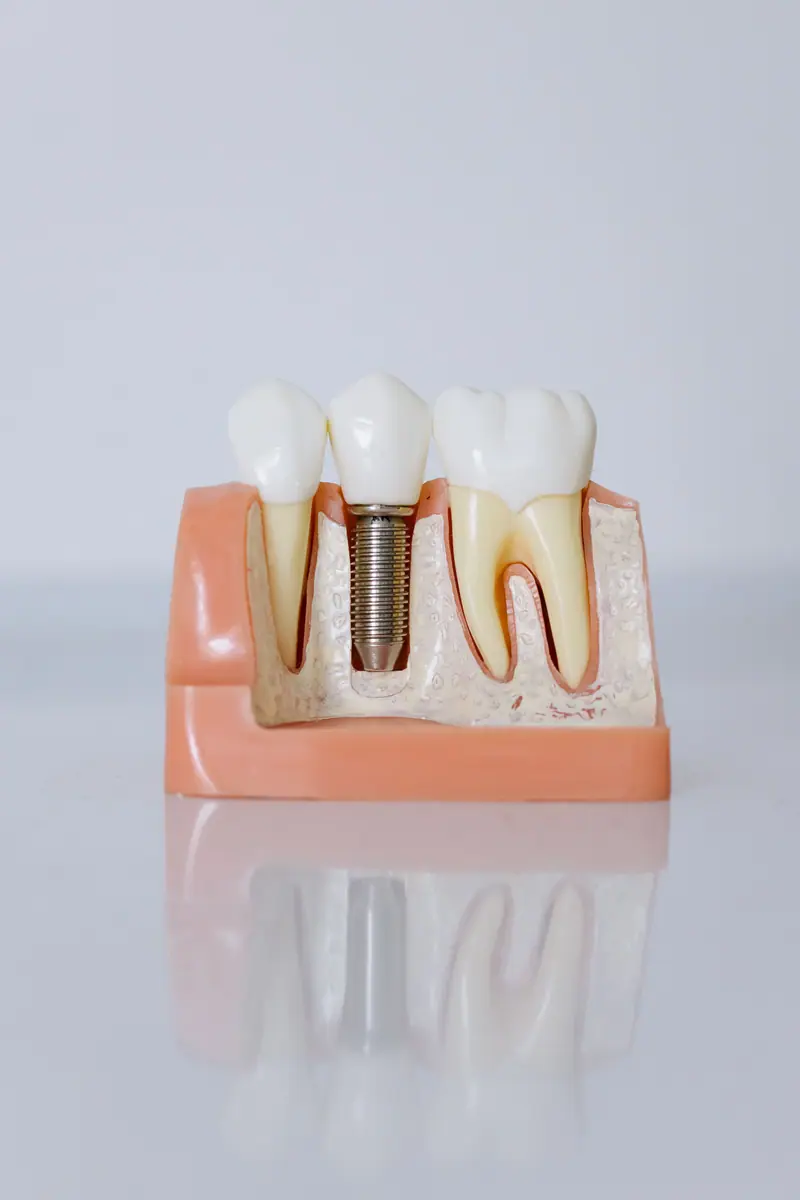
This is the website of one dentist, not a clinic. I am an implant surgeon and a prosthodontist, which means I place the titanium root and I design the tooth that sits on it.a A prosthodontist is a dentist with specialist training in replacing teeth: crowns, bridges, dentures, and the teeth on implants. In many practices one clinician places the implant and another restores it.
Most of my patients are referred by their own dentist; some find me directly. Either way, you keep your own dentist for check-ups, cleanings and everything else. I see you for the implant, then hand you back with a written summary and the X-rays.b Referring dentists receive the plan, the surgical notes and the final radiograph within a week of each stage.
Implants are a good answer to a specific set of problems. They are not the answer to every gap, and the right first step is often a conversation about whether to do anything at all. The situations I see most often are below.
| Situation | Usually leads to | Typical duration |
|---|---|---|
| One missing tooth, healthy neighbours | A single implant and crown; the neighbouring teeth are left untouched | 3–6 mo |
| A tooth that is failing — cracked root, repeated infection | Extraction, often with an immediate or early implant in the same socket | 3–6 mo |
| A bridge that has failed | One or two implants replacing the bridge, sparing the teeth it leaned on | 4–8 mo |
| A loose lower denture | Two implants holding a snap-on denture in place | 3–4 mo |
| Most or all teeth in a jaw failing | A fixed full-arch bridge on four to six implants, often with fixed teeth the same day | 1 day + 4–6 mo |
| An implant elsewhere that is failing | A second opinion first; then maintenance, repair, or replacement | varies |
You should meet the person who places your implant well before the morning they place it.
If you smoke, have diabetes that is not yet well controlled, or are taking certain bone medications, implants are still often possible — but the plan changes, the odds change, and we will talk about both plainly before anything is booked (§4.1).
How I treat
2Methods
The protocol is the same at every practice I work in. It is slower at the start than most people expect, and quicker at the end. Six stages, each with its own appointment and its own written summary.
2.1 Consultation and imaging 60 min
We talk first: what bothers you, what you have tried, what you want the tooth to do. Then a cone-beam CT scan and an intra-oral scan, so the plan is built on your actual bone and bite rather than on an estimate.c Cone-beam CT is a 3D X-ray of the jaw, taken seated in under a minute. For a small field of view the dose is low — in the range of days to a few weeks of natural background radiation.
2.2 Planning no appointment
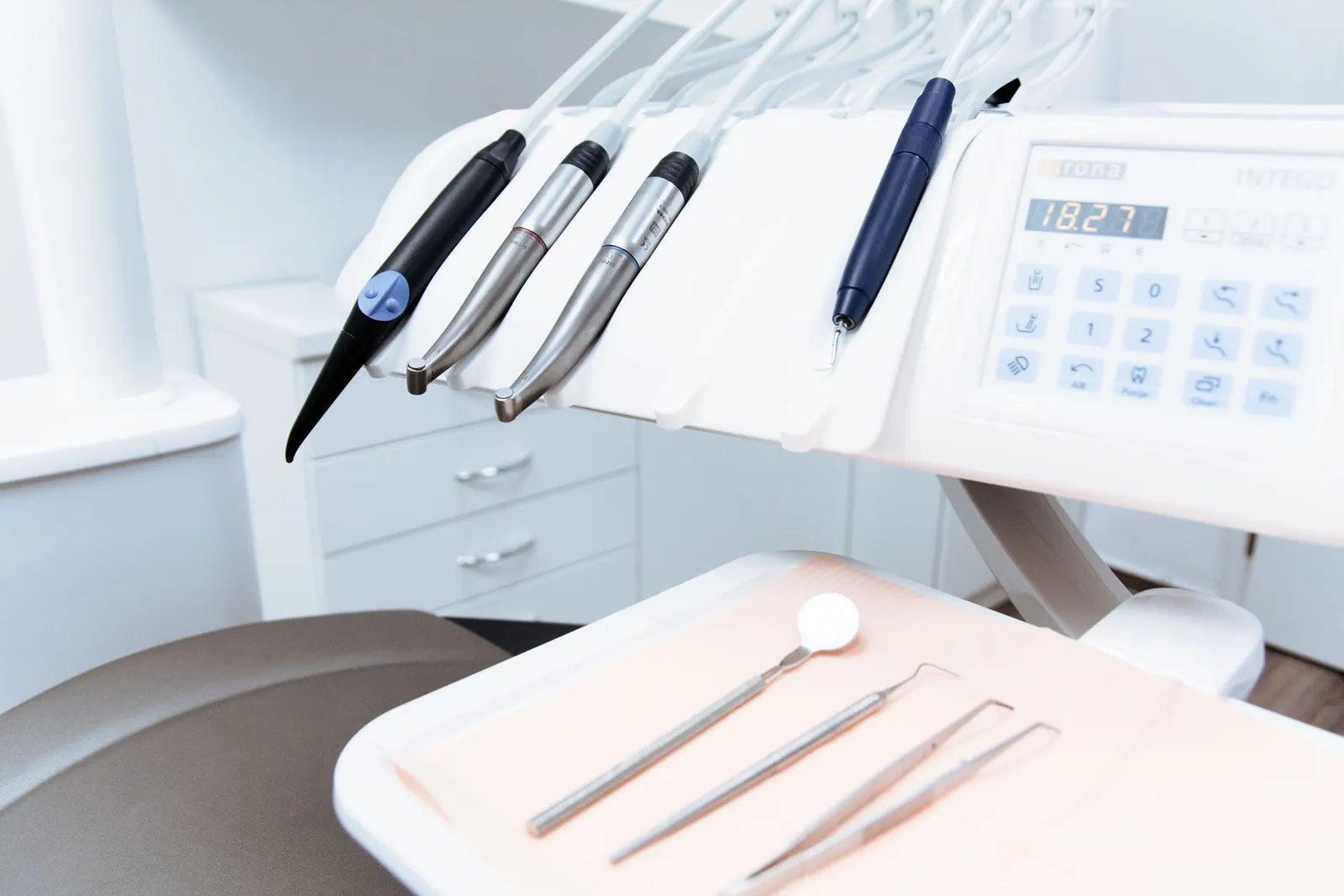
I design the final tooth first, on screen, and then place the implant virtually where that tooth needs it — not where the bone happens to be easiest. The plan is printed as a surgical guide and rehearsed on a model of your jaw. You receive the plan, the fee, and the alternatives in writing.
2.3 Surgery 45–90 min · local anaesthetic
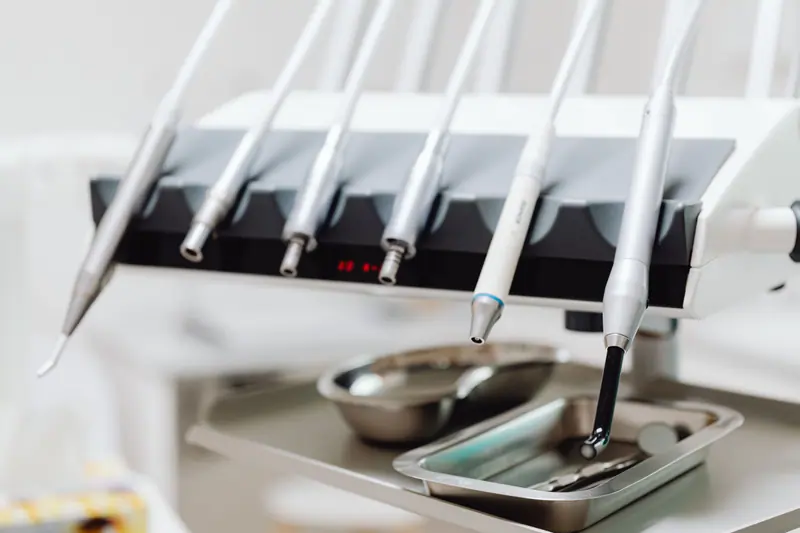
With the guide in place, a single implant usually takes under an hour. Most people describe the next day as sore rather than painful, and are back at work within one or two days.d Oral or IV sedation is available at two of the three partner practices, for longer procedures or for anyone who would rather not be fully aware.
2.4 Healing 8–16 weeks
Bone grows onto the implant surface — osseointegration — over two to four months. If the tooth is visible when you smile, you leave with a temporary; you will never walk around with a gap.
2.5 Restoration 2–3 visits
A digital impression, a try-in, and the final crown — designed by me and made by a laboratory I have worked with for a decade. Wherever possible the crown is screw-retained rather than cemented.e A screw-retained crown can be removed by a dentist for cleaning or repair without cutting it off, and leaves no cement under the gum to irritate it.
2.6 Maintenance yearly
A review and X-ray at one year, then a yearly check alongside your usual hygiene visits. Implants do not decay, but the gum and bone around them can become inflamed; most of what keeps them healthy happens at home.
- 2.1 Consultation & scanwk 0
- 2.2 Planning & guidewk 1–2
- 2.3 Surgerywk 3
- 2.4 Healingwk 4–15
- 2.5 Restorationwk 16–18
- 2.6 Reviewwk ~30, then yearly
What happens over ten years
3Outcomes
Every implant I place goes into a register: when it was placed, where, into what kind of bone, and how it is doing at each review. A survival curve is the honest way to show that register, because it counts everyone — including the people who have only been followed for a year.f On a real version of this site this figure would show the practice’s own audited register. On this concept page the data are invented — simulated to be plausible, not drawn from patients.
Fig. 3. Implant survival by clinical situation
- Years since placement
- 5.0
- Implant survival
- —
- 95% CI
- —
- Number at risk
- —
—
Kaplan–Meier estimate of the proportion of implants still in function; shaded band is the 95% confidence interval, short ticks are implants still being followed (censored). Y-axis starts at 90%. Drag along the time axis, or focus the figure and use ← →. Illustrative concept data — invented for this demonstration, not real patient outcomes.
Two things are worth reading off the curve. Most losses that happen at all happen early — in the first months, before the implant has fused with bone — and those are usually replaced successfully. After that the lines flatten; late losses are mostly about gum health and bite forces, which is why §2.6 matters.g Survival means the implant is still in the mouth and in use. Success is a stricter measure that also asks about bone level, gum health and comfort; it is always somewhat lower than survival.
| Situation | Implants (n) | 1-year | 5-year | 10-year | At risk, yr 10 |
|---|
Risks, limits, and the questions people ask
4Discussion
4.1 Limitations and risks
Implants are reliable, not guaranteed. These are the risks I discuss at every consultation, and what is done about each one.
| Risk | How often | What I do about it |
|---|---|---|
| Implant does not integrate | Uncommon; mostly in the first months | Removed, the site heals, and a new implant is placed — the surgical fee is not charged twice |
| Inflammation around the implant (peri-implantitis) | The most common late problem | Screw-retained crowns, yearly X-rays, and hygiene instruction before it starts |
| Nerve or sinus nearby | Rare with 3D planning | Measured on the CBCT; a shorter implant or a graft when the margin is too thin |
| Smoking, diabetes, bone medication | Raises the odds of every item above | Discussed before booking; sometimes the honest advice is to wait |
| Gum line in the front of the mouth | Depends on your gum thickness | Soft-tissue grafting or a temporary to shape the gum before the final crown |
A plan that survives contact with your actual bone is worth more than a fast one.
4.2 Questions patients ask
Q1 Does it hurt?
The surgery itself is done under local anaesthetic, so you feel pressure rather than pain. Afterwards, most people take ordinary painkillers for two or three days. A single implant is usually less uncomfortable than the extraction that came before it.
Q2 How long will it last?
Well-placed implants that are looked after can last decades. The crown on top is the part that wears; expect to replace it at some point, which is simpler with a screw-retained design. Fig. 3 shows how the odds change over the first ten years.
Q3 Can I have teeth the same day?
Often, yes — especially for full-arch cases, where a fixed provisional bridge can be attached the same day. For single teeth it depends on how firmly the implant is held at placement. You will know which applies to you after planning, not on the day.
Q4 I was told I don’t have enough bone.
Sometimes that is true, and sometimes it is true only for a standard implant in a standard position. Grafting, shorter or narrower implants, or a different angle can change the answer. A second opinion with a CBCT scan is a reasonable first step.
Q5 What does it cost?
For this concept: a single implant with its crown typically falls between $4,800 and $6,200, including planning and the guide. You receive a written, itemised estimate after planning and before any surgery is booked.
Q6 Will my own dentist still see me?
Yes. I treat the implant and send you back with a written summary, the radiographs, and maintenance notes for your dentist and hygienist.
Credentials and where I practise
5About the author

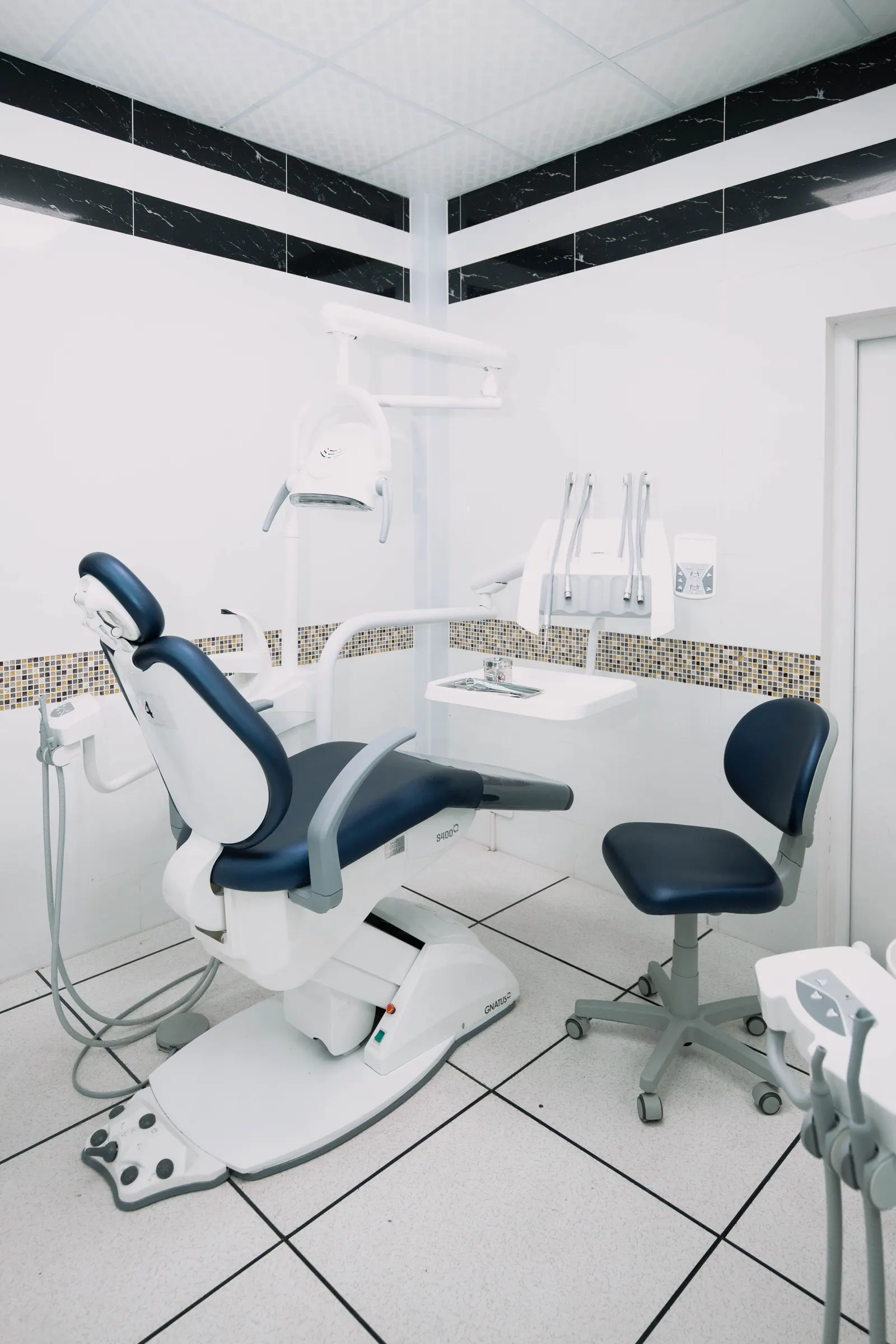
I trained first as a general dentist, then as a prosthodontist, and wrote my doctorate on how implants are positioned relative to the teeth they will carry. Since 2014 I have worked as an independent implant surgeon and restorer, visiting three partner practices rather than running one of my own — so the chair is close to you, and the person is the same.
I see fewer patients than a clinic would, on purpose. Each case gets a scan, a plan on paper, and the same pair of hands at every stage.
- Training
- DMD, 2006 · Certificate in Prosthodontics, 2010 · PhD, oral implantology, 2013 (institutions omitted in this concept)
- Practice
- Independent implant surgeon & prosthodontist since 2014 · three partner practices
- Teaching
- Honorary clinical lecturer; study-club talks on guided surgery and screw-retained restorations
- Languages
- English · French
| Practice | Neighbourhood | Days | Telephone |
|---|---|---|---|
| 1 Saint-Clair Dental Atelier | Riverside | Mon · Tue | (555) 014-2207 |
| 2 Larchmont Dental Partners | Larchmont Hill | Wed · Thu | (555) 014-3318 |
| 3 Harbourview Family Dentistry | Harbourview | Alternate Fri | (555) 014-4490 |
- Conflicts of interest
- None, beyond a strong opinion about cleaning under bridges.
- Funding
- No implant manufacturer pays for, or chooses, what is placed.
- Data availability
- The data in Fig. 3 and Table 2 are illustrative concept data, generated for this demonstration.
Request a consultation
✉Correspondence
Address for correspondence
Dr. Mireille Duval
Referrals office
(555) 014-0100
referrals@duval-implants.example
Replies within two working days. Dentists: include recent radiographs if you have them.
Received — but not sent
Thank you.
Nothing was sent. This is a concept site by Webonology, and the form does not submit anywhere. On a real site, the referrals office would reply within two working days to arrange a consultation and scan.